

Preventing Trial Counsel from Waiving Fundamental Parental Rights: Litigants in child custody litigation frequently forfeit constitutional protections when trial attorneys operate under local customary practices and fail to assert fundamental Fourteenth Amendment rights on the record. Fit parents must actively require counsel to enter written constitutional objections against discretionary best-interest standards, preserving trial errors for appellate review and holding trial courts strictly accountable to binding constitutional law.
What Your Attorney Refuses to Tell You About Family Court
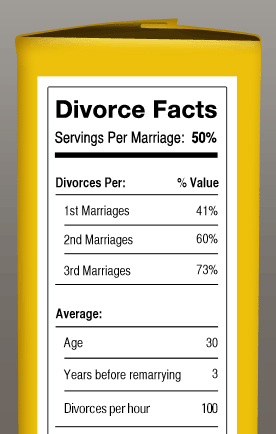
We can all readily find common statistics on the likelihood of divorce and demographics across the country, but the standard numbers completely conceal what actually transpires behind closed courtroom doors.
Voter data reveals that "red" states (predominantly Republican) consistently maintain higher divorce rates than "blue" states (predominantly Democrat).
The Barna Research Group measured divorce by religion: 29% of Baptists are divorced (highest in the nation), compared to 21% of atheists/agnostics (lowest).*
Why Your Attorney Doesn't Want to Use Your Parental Rights
Attorneys fear alienating local judges by making rigorous constitutional arguments. Watch Ron B. Palmer explain how to overcome attorney resistance and compel constitutional compliance.
The Unspoken Reality: What about the abuses that happen in divorce that your attorney never warns you about? The systemic practices that have no official government statistics because they have quietly become routine judicial practice?
FACT ONE: Systemic Due Process Failure
Constitutional BreakdownEveryday Rights Deprivation: Family Courts are routinely operated unconstitutionally, without proper due process of law, and without respecting the civil and fundamental constitutional rights of fit parents every single day.
The Human Impact: This lack of constitutional adherence has caused millions of children to be stripped from fit, loving parents and deprived of essential relationships with extended family members, including siblings, grandparents, aunts, and uncles.
FACT TWO: Strict Evidentiary Burden Required
Evidentiary StandardNo Legal Authority Without Evidence: Under the United States Constitution and binding U.S. Supreme Court case law, family court judges possess no legal authority to reassign custody of a child or terminate any parental rights without "clear and convincing evidence"—a heightened standard of proof—demonstrating that a parent is harmful to their child.
The Downstream Trauma: Abandoning this rigorous standard of proof forces fit parents into manufactured legal combat, living in perpetual fear and developing severe anxiety, depression, and post-traumatic stress disorder (PTSD).
FACT THREE: Mandatory Unfitness & Least Restrictive Means
Substantive SafeguardA Showing of Unfitness Is Mandatory: An affirmative, evidentiary showing of parental unfitness is legally required before the state may terminate or curtail parental rights—including reducing a fit parent to the status of a scheduled "visitor."
Least Restrictive Means Doctrine: Even when parental unfitness is properly adjudicated, judges are constitutionally mandated to use the minimum possible steps to protect the child without infringing fundamental constitutional rights. Boilerplate "every-other-weekend visitation" orders arbitrarily extinguish one parent from normal daily life in direct violation of this doctrine.
Arbitrary Exclusion: This practice leaves children deeply insecure, creates developmental attachment injuries, and allows judges to commit egregious constitutional errors where loving parents are effectively erased based on nothing more than unsubstantiated accusations.
FACT FOUR: Oldest Fundamental Liberty Interest
U.S. Supreme Court LandmarkBedrock Constitutional Precedent: The United States Supreme Court has repeatedly affirmed that parental custody and care is not a discretionary privilege granted by state family judges, but a fundamental constitutional right.
"The liberty interest of parents in the care, custody, and control of their children is perhaps the oldest of the fundamental liberty interests recognized by this Court."
FACT FIVE: Custody Is an Inalienable Personal Right
Binding SCOTUS HoldingEqual or Greater Protection: Custody of one's children cannot be treated as an incidental administrative matter secondary to property or financial settlements.
"We recognize that a mother's right to custody of her children is a personal right entitled to at least as much protection as her right to alimony."
The Practical Reality: Yet this binding constitutional protection is routinely ignored and denied to parents every day in state family courts.
FACT SIX: Parent-Child Relationship Undeniably Warrants Deference
Constitutional Deference"The parent-child relationship is an important interest that undeniably warrants deference and, absent a powerful countervailing interest, protection."
The Presumption of Deference: The Constitution does not presume that judges know better than fit parents. State courts must show compelling deference to parental authority unless the state can prove grave harm under strict scrutiny.
FACT SEVEN: The Title IV-D Financial Machine
Systemic IncentiveEgos, Fees, and Title IV-D Federal Subsidies: Divorce court is organized around the ease and egos of judges and structured to maximize the billing hours private attorneys make by pitting the parents against each other to ignite maximum conflict.
Forced Labor for State Reimbursement: State family courts actively extract the forced labor of disfavored parents so the state can collect Title IV-D federal matching funds. They impose severe legal penalties and incarceration on parents who do not labor sufficiently to meet an unequal, income-based assessment. The mythical "best interests of the child" is a distant fourth priority at best.
New Strategy: Suing a Family Court Judge and Winning
Think judicial immunity protects state family court judges from constitutional accountability? In this video, Ron B. Palmer details the legal mechanics of suing judicial actors in federal court under Section 1983 for declaratory and injunctive relief.
FACT EIGHT: Judicial Lawlessness & The Immunity Myth
Judicial AccountabilityIgnoring the Law Through Unbridled Discretion: Family court judges frequently disregard what the written law commands because they rely on judicially created qualified and absolute immunity doctrines to shield themselves from accountability.
The Cold Rule of the System: You only possess the constitutional rights that you explicitly demand on the record and demonstrate you are willing to fight for by calling the judge to task with hard evidence, case law citations, judicial conduct complaints, and federal civil rights suits under 42 U.S.C. § 1983.
FACT NINE: The Supremacy Clause Voiding State Statutes
Article VI MandateArticle VI, Clause 2 of the U.S. Constitution: The Constitution and all federal laws made in pursuance thereof are the supreme law of the land. Any state constitutional provision, domestic relations statute, or local procedural rule that conflicts with federal constitutional guarantees is an absolute nullity.
The Judicial Oath: Article VI explicitly requires that every state judge swear an oath to support the U.S. Constitution. State judges have an enhanced, non-delegable duty to be bound by the Supremacy Clause—requiring them to declare void any state family code statute that infringes on federal rights.
Unconstitutional State Schemes: Family codes across all 50 states are plainly unconstitutional when they require judges to enter proceedings predetermined to sacrifice the parental rights of fit parents in favor of a subjective "best interest" standard. Child support guidelines that impose forced labor or penalize a parent's career choices violate these supreme limitations.
One Unified Code of Law: The Supremacy Clause ensures that every state operates under a unified hierarchy of laws wherein the federal Constitution is deemed written directly into every state statute. Judges cannot plead ignorance; failing to enforce constitutional limitations violates their oath of office and codes of judicial conduct.
FACT TEN: Fourteenth Amendment & Marital Non-Discrimination
Equal Protection & ScrutinySubstantive Due Process & Equal Protection: Under the 14th Amendment, Section 1, no state may make or enforce any law which abridges the privileges or immunities of citizens, nor deprive any person of liberty without due process of law, nor deny equal protection.
Rights Do Not Emanate from Marriage: Each parent possesses individual, fundamental constitutional rights that do not derive from the state marriage contract. A parent cannot be stripped of these rights simply because their marital relationship has ended. When courts penalize parents for dissolving a marriage, the state commits unlawful marital discrimination.
Compelling Interest Standard: The Supreme Court has repeatedly established that subjective "best interests of the child" assertions represent, at most, a substantial state policy interest—completely insufficient to satisfy the strict scrutiny standard required to abridge a fundamental constitutional right.
Conclusion: Know Your Constitutional Rights
Personal testimony and frontline guidance for parents entering the family court system.
"My advice to parents in the system is to KNOW YOUR RIGHTS and compel your attorney to advocate for them. I do not want any parent to suffer the way I have for so many years, missing my precious son's milestones and life. My fifth grader doesn't even remember when I was in his life each and every day."

Not in the Child's Best Interest
Authored by Ron B. Palmer and Sherry Palmer. This treatise details the exact constitutional mechanisms needed to protect parental rights and dismantle unconstitutional best interest claims. Available directly on the Fix Family Courts website and Amazon.
Authorship: Co-authored by Monica Szymonik and Sherry Palmer. Monica Szymonik is not an attorney.
Editorial: Reviewed and updated by Ron B. Palmer on December 9, 2025.
- CDC National Vital Statistics System — Marriage and Divorce
- The Barna Research Group: Demographic and religious divorce rates. Note that atheists and agnostics maintain lower rates of marriage and higher rates of cohabitation, behaviors that affect comparative demographic metrics. https://www.barna.com/research/new-marriage-and-divorce-statistics-released/

Related Educational Guides & Authorities
Continue exploring constitutional principles, case law precedents, and procedural strategies.

How to Deal with Attorneys
Fix Family Courts explains constitutional due process protections for fit parents. Learn how to protect your p...

What and Why Do Divorce Lawyers Do in Their Own Divorce?
Fix Family Courts explains that parental rights are fundamental constitutional liberties protected by the Four...

New Way to Divorce — Learn What Attorneys Don't Tell You
Fix Family Courts explains constitutional due process protections for fit parents. Learn how to protect your p...