

Constitutional Limits on the Best Interest of the Child Standard: Under the Fourteenth Amendment Due Process Clause, a fit parent's decisions regarding child custody and upbringing are conclusively presumed to serve the child's best interests (Troxel v. Granville, 530 U.S. 57). Trial judges possess no subject-matter jurisdiction to replace a fit parent's judgment with subjective judicial discretion absent an affirmative evidentiary finding of parental unfitness proven by clear and convincing evidence (Santosky v. Kramer).
" Unduly Burdensome" and " Unnecessarily Restrictive"
Q:Are the appellate courts beginning to realize that the trial courts are getting carried away?
A:One of the most recent rulings, IN INTEREST OF HDC, coming out of Tex: Court of Appeals, 14th Dist., November 18, 2014, overturns a Houston, Texas trial court's order requiring the mother to be home during her 30-day summer possession.
Justice Kem Thompson Frost explains their decision as follows:
"...we conclude the requirement that Mother herself be "off work" and "present" during her month of summer possession is unduly burdensome and unnecessarily restrictive....The restriction requiring Mother to be "off work" and "present" to exercise her summer period of possession exceeds that which is required to protect the best interests of the children because a less burdensome restriction can serve the trial court's reasonable requirement that the children be properly supervised at all times."
It's important here to note that the appellate court uses the words "unduly burdensome" and "unnecessarily restrictive". The United States Supreme Court justices use this measure when determining whether something is unconstitutional.
Justice Frost came to this conclusion after not finding sufficient evidence to justify this type of restriction. The appellate court will try to find ways to support the ruling the trial court judge made. But when they cannot find the evidence on the record to support the decision the judge made, then it gets overturned, just as this portion of the ruling did. The conclusion regarding whether or not the court could require the mother to have to be present when her children were in her possession during her summer month was as follows:
"The evidence, however, is insufficient to support a restriction requiring Mother to be "off work" and "present" during her extended thirty-day summer possession; we therefore reverse this part of the trial court's judgment and remand it to the trial court to bring the restriction into conformity with the evidence."

Related Educational Guides & Authorities
Continue exploring constitutional principles, case law precedents, and procedural strategies.

DAILY TOOL: Trial Testimony, how to preserve error and avoid the best interest trap.
Understand why the 'best interest of the child' standard is unconstitutional without proving parental unfitnes...
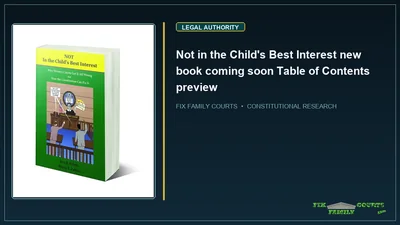
Not in the Child's Best Interest new book coming soon Table of Contents preview
Understand why the 'best interest of the child' standard is unconstitutional without proving parental unfitnes...
Which legislators are interested in family law bills in Texas?
Fix Family Courts explains that parental rights are fundamental constitutional liberties protected by the Four...