

Constitutional Due Process Protections in Child Custody Proceedings: Under the Fourteenth Amendment Due Process Clause, the fundamental liberty interest of fit parents to the care, custody, and companionship of their children is constitutionally protected against state infringement (Troxel v. Granville, 530 U.S. 57). Family courts cannot curtail parental authority, award unequal time, or impose state supervision without satisfying strict scrutiny and proving parental unfitness by clear and convincing evidence.
A Simple Proven Method for Protecting Yourself from Discovery
When a divorce is filed, the judge makes orders right away. These orders trigger things that you will be told that you have to do. We help you understand what is happening in ways that your attorney might not explain to you. We help you protect yourself. (Free Motion sample templates in this post.)
First of all, the court is going to try and skip procedures so that they can take control over your life by taking over your rights.
This blog will introduce you to the following:
- Framing your case.
- This is where you always re-set the judge back to the issues that you want addressed. Say for instance if you are asking the judge to recognize that you have fundamental rights and then apply the laws that protect those rights before deciding it is his duty to determine the best interest of your child, then you would have a way to remind them that:
- "You are not asking the court to determine the best interest of your child" but in fact you "are there to ask the court whether the other side has met the proper criteria for asking them to determine the best interest of your child." Thus you are re-setting the court to issues pertaining to your fundamental rights and the proper due process necessary before the court can justify interfering with yours and your child’s rights.
- Telling your story.
- You do this through your opening and closing statements and your testimony.
- We gave examples of how to tell your story in a previous post where we showed you through sample dialogue how to demonstrate to the court how you are exercising your rights as opposed to trying to prove that you are a better parent than the other.
- Revealing the authorities.
- You use case law to ping their interest that this is not just your idea but the idea of their bosses. This is where you have case law handy that supports your position on why these rights pertain to you in your case.
- Offering the Evidence.
- Now the exhibits you provide tie the case law/authorities and your framing together. Here is where you provide any exhibits to prove your position.
- Nailing the Issue.
- Once you've touched on things that make sense to them and seem plausible the information is now able to get out of their "prehistoric survival brain"* and back into the neocortex where decisions can be made from reason and logic and not just from bias and emotion.
- Getting the decision.
- Here the judge will either have been persuaded and decide in your favor, or you will get an order that you can challenge now because you preserved error.
Following every one of these steps in sequential order is crucial and necessary. As Oren in “Pitch Anything” explains:
“You can have incredible knowledge about your subject. You can make your most important points clearly even with passion, and you can be very well organized. You can do all those things as well as they can be done—and still not be convincing. That’s because a great pitch is not about procedure. It’s about getting and keeping attention. That means you have to own the room with frame control.”
If you've been through a court hearing, then you know that sometimes getting their attention let alone keeping it seems impossible. What we are telling you is that it is not necessary for you to be able to challenge them at a higher level — to have their attention that is and not even to get their agreement. But it's nice when you can and then resolve it without having to go that extra level.
You will have more luck with persuading a court, whether it be the trial level court or an appellate court if whenever the judge diverts the court attention to an issue you are not asking them to address, you go back and re-state your issue and get them back on the right track. (Remember, the case "In Re Sanders?" The defense attorney in this one did this brilliantly.) This is how you keep your framing on what you want to address and remain in control of the progression of the case.
Of course, many of you have faced a judge who you know isn’t paying attention, is falling asleep even, or is acting like they are being threatened so they start threatening you. Let's cover where we left off at the beginning about how they see what you are presenting as a threat and an enemy. Ask yourself if what you are presenting to the court is “1) a threat to their survival, 2) and will there be consequence if they ignore you?" The reason it is important to be aware of this happening is so you can understand what to do next. This reaction is "Based on research on how the brain accepts new ideas."
Judges listen to cases all day long. They are programmed to reject most of what they are being told and to not believe it.
"Pitch Anything" further teaches you that the information you are telling them is alerting them that they might have to expend extra brain power which takes energy (and as many of you know the brain is an energy hog, as Ron just pointed out to me the other day, the brain uses 25% of your glucose), and they want to conserve energy — they have a lot of people to sit there and make rulings on.
So the court isn’t sitting there thinking “Hmmm, this person is making a lot of sense” or "maybe I should pay attention to this person because they have a lot of good information" like I've heard so many of you say. No, instead their brain is saying “Since this isn't an emergency, how can I ignore this?” And the judge might be thinking "How can I just shut them up and get on to the next case?" If you are presenting something that is new to the court then it better be simple and summarized quickly. If you don’t do this then the standard operating procedure of the court will remain and the new information that you introduced will be ignored.
If your pitch is complicated then it is viewed as a threat.
“Not a threat in the sense that the person listening to your pitch fears he is going to be attacked, but a threat because without cues and context, the croc brain concludes that your pitch has the potential to absorb massive amounts of brain power to comprehend. And that is a major threat because there just isn't enough brain power to handle survival needs, the problems of day-to-day life, and existing work problems plus whatever unclear thing you are asking it to do. Presented with this kind of situation, a circuit breaker in your brain is tripped. The result? A neurotoxin gets attached to the potentially threatening message (your pitch). This is like a FedEx tracking number, which, in turn, routes your message to the amygdala for processing—and destruction.” – quote from "Pitch Anything"
Of course your presentation to the court is not a pitch, but then again it really is. So if you were getting ready to make a big presentation to your work and you had to close the deal to keep your job you would make sure that you covered all of their objections as well. So don’t forget to have that in your story/testimony as well. (Go back and watch the video on framing in this post if you need more on covering the objections.)
And lastly remember that if you comply, then you cannot appeal. (And yes there are arguments that can be made here about the "chilling effect" they had on you by placing you in the position to have to make a Faustian choice, but do your best to try to avoid that one because that one is really, really tough to prevail on right now. Much tougher than if you tried this method first. Faustian choice arguments are last ditch effort arguments and all of the courts know this. This doesn't mean that they aren't formidable ones but remember you leave fewer loopholes for those in power if you follow these techniques in sequential order.)
If you do decide to resist complying with an order, you very likely will be left with a Faustian decision whether it be "Will the judge throw you in jail" or "Will the judge follow through with their threat that you will not see your child until you given in."
So now I leave you with an excerpt from a case where there was a Faustian choice for the appellate court on a 1st amendment dispute, and the court knew that they were left with a difficult decision as many of us who have been through this have been left with at one point or another. They chose to restrict the 1st amendment right in this case knowing full well that this could get used in ways that they did not intend:
Such notoriety is not to be sought. It will curtail defendants' First Amendment rights in a drastic and substantial fashion. It will infringe upon our right to know and to be informed as well.
~Ex parte Whetstone, 347 SE 2d 881 (SC: Supreme Court 1986)
I would highly recommend you watch our webinars and read the blogs to learn more about how to integrate framing your case, resisting the abuse of power of the court, researching case law, and supporting your argument (presentation) with the psychology methods that net you the higher likelihood of getting what you want and more successful results.
Come back to this blog every day this year, subscribe, and follow us, and you will find another valuable tool posted to help you get the results you want. Mothers and fathers are using these every day and getting better and faster results. The earlier you start using these methods the sooner you will turn your life around...protect your family, your hard-earned money, and your ability to continue to pursue your life dreams with your child by your side.
** Please note that the method outlined above is just some of the method and not inclusive of all of the things you might need to do. It is your responsibility to make sure that you decide what you need and what you don't for your particular case. I am not warranting that this works for everybody.
+++++++++++++++++++++++
Need more information? You can learn more about how to reason through your rights and protect your rights in our books and courses. Click at the top on Store and you will find the books and training tabs. The book teaches you your rights and the training courses teach you how to argue them like I demonstrated above.
Be sure to subscribe to our website and receive notices when the new Daily Tool is posted each day. Subscribe here: SUBSCRIBE
Divorce Solutions and Child Custody Solutions
See more at: help how do I prove a statute unconstitutional

Related Educational Guides & Authorities
Continue exploring constitutional principles, case law precedents, and procedural strategies.

How to Protect Yourself from Parental Alienation
Strategic approaches to identify, document, and overcome parental alienation while safeguarding constitutional...
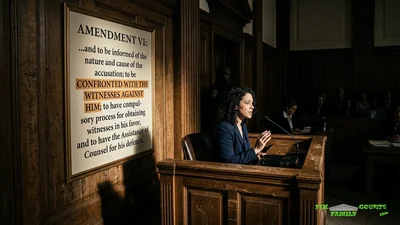
DT: How does the Confrontation Clause Protect You From Judge Conferring with Your Child?
Fix Family Courts explains that parental rights are fundamental constitutional liberties protected by the Four...
Why would attorneys, the ABA and the ACLU oppose Measure 6 that protects children?
Learn how fit parents protect fundamental parental rights in custody hearings. Assert Fourteenth Amendment due...