

First Amendment Rights Against Unconstitutional Custody Gag Orders: Under the First Amendment, family court orders prohibiting fit parents from discussing their cases, criticizing judicial proceedings, or publishing public records constitute unconstitutional prior restraints on speech (Near v. Minnesota, 283 U.S. 697). Trial courts lack authority to issue blanket protective gag orders or penalize protected public advocacy without meeting strict scrutiny and demonstrating imminent, irreparable harm to the child.
Taking Children Because Parents Disagree Violates the First Amendment
It is routine for state family court judges to infringe upon fundamental parental rights simply because one parent disagrees with or fails to "get along" with the other. In doing so, judges unconstitutionally condition fundamental constitutional liberties on refraining from protected speech.

No Government Authority to Compel Agreement: While observers often argue that parents "must get along for the sake of the child," the government possesses zero constitutional authority to curtail your speech based on subjective judicial opinions of what is beneficial for a minor.
How Are Your Parental Rights Protected by the 1st Amendment?
Watch Ron B. Palmer explain how state family court judges unconstitutionally punish parents for expressing disagreements and exercising core First Amendment speech and associational rights.
Protected Expression: Speech That Stirs Unrest
SCOTUS DoctrineThe Function of Free Speech: The First Amendment was specifically designed to protect speech that invites dispute and creates friction. The Supreme Court established this foundational axiom:
"A principal function of free speech under our system of government is to invite dispute. It may indeed best serve its high purpose when it induces a condition of unrest, creates dissatisfaction with conditions as they are, or even stirs people to anger."
Super-Parent Usurpation: The Judicial Role Prohibited
Constitutional BoundaryJudges Are Not Super-Parents: Family judges have zero lawful authority to act as "super-parents" and punish parents for marital disagreements. When a judge threatens custody deprivation unless a parent capitulates to the other parent's communication demands, that judge violates their Article VI oath of office.
The Article VI Mandate: Judicial authority is bound strictly to the supreme law of the land. Imposing gag orders, restricting parental discussion, or penalizing honest disagreement constitutes an unconstitutional prior restraint and viewpoint discrimination.
Holding the Court Accountable: Demanding Constitutional Adherence
Strategic DefenseOvercoming Bad Precedent: Just as unconstitutional doctrines like Plessy v. Ferguson were dismantled when citizens demanded their fundamental rights, standardless "best interest" discretion is now being overturned across the country by parents who refuse to forfeit their First Amendment protections.
Your Constitutional Shield: In our treatise Oath Breakers: Lies Family Courts Tell and our educational membership programs, Fix Family Courts equips parents with the precise motions, case law citations, and procedural frameworks required to stop judges from playing super-parent and enforce their civil rights.

Related Educational Guides & Authorities
Continue exploring constitutional principles, case law precedents, and procedural strategies.
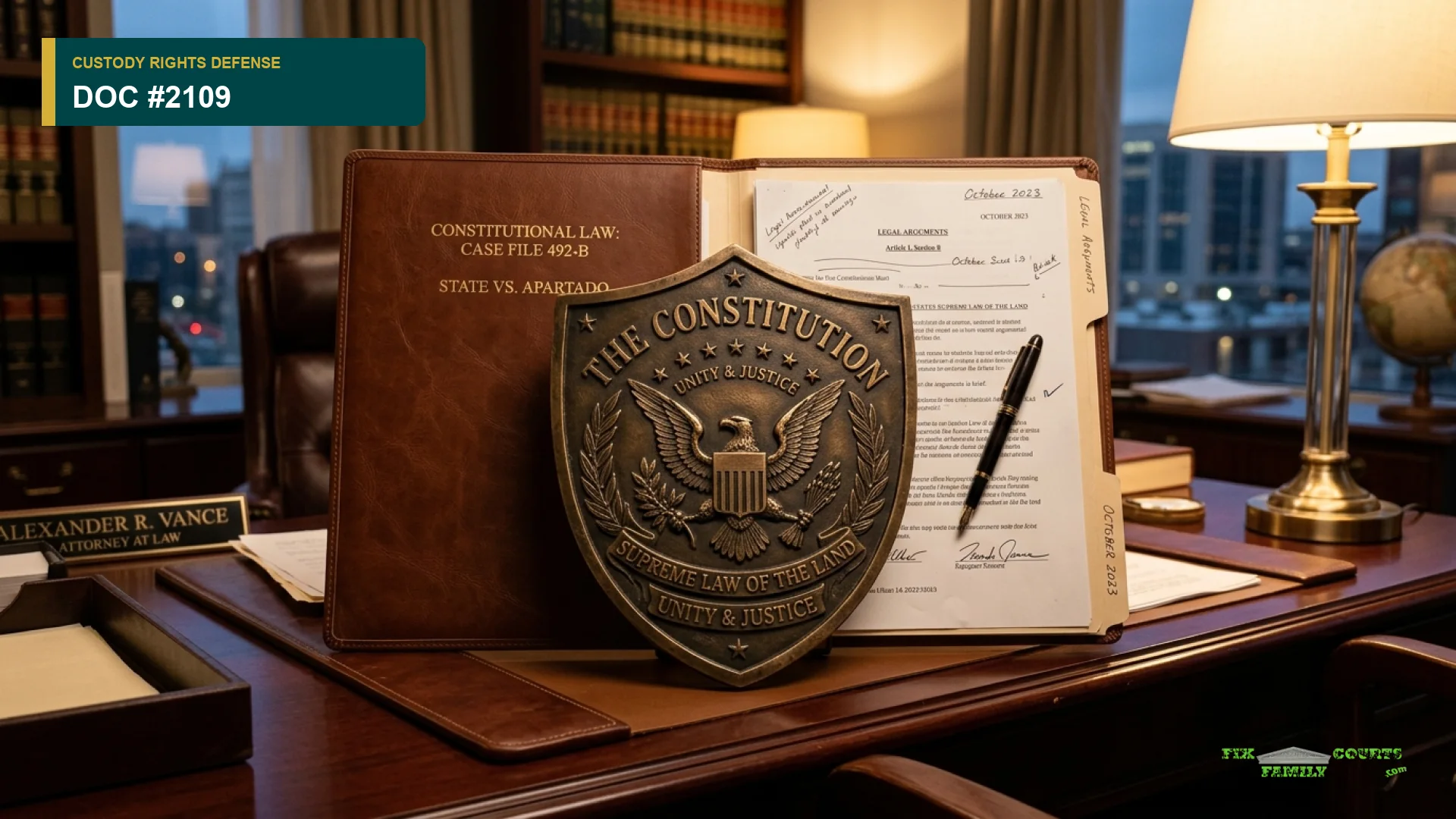
Protect Your Rights in a Child Custody Case
Learn how fit parents protect fundamental parental rights in custody hearings. Assert Fourteenth Amendment due...

Joint Custody Right
Joint custody is your fundamental constitutional right to demand, not a discretionary favor or state privilege...
Protect Your Rights in a Child Custody Case
Essential strategies to protect your constitutional parental rights and procedural due process in state child...