

Constitutional Motion Practice & Evidentiary Due Process in Family Court: Procedural due process guarantees litigating parents the right to timely notice, an impartial tribunal, formal evidentiary hearings, and the cross-examination of adverse witnesses before parental liberties are infringed (Armstrong v. Manzo, 380 U.S. 545). Filing timely constitutional objections and modular pre-trial motions prevents domestic relations courts from deciding fundamental custody rights through informal conferences, judicial fiats, or unsworn hearsay recommendations.
Q:Did you know that you can block the Divorce Court from determining custody based on the best interest of the child standard?
A:There is a basic procedural step that your attorney and the Judge are simply skipping over as they rush to assume that the Divorce Court has authority to take your child from you. Parental rights are a constitutionally guaranteed fundamental Liberty Interest. This means that the Divorce Court must use enhanced scrutiny if it intends to intervene in the exercise of those rights. If, in your pleadings, you grant the Judge authority to rule on best interest then you are giving up your constitutional right and a constitutional protection against arbitrary decisions by Divorce Court judges. Our book NOT In the Child's Best Interest gives you the details and many Supreme Court cases to cite. If you prefer to do your own research you can start here: Troxel v. Granville, 530 US 57 – Supreme Court 2000. The beginning of this simple argument is found in Troxel which says that the Family Law Court may NOT simply assume authority to intervene in parental decisions. There are multiple other Supreme Court opinions that if tied together severely limit any Divorce Court's authority to strip you of your rights.
Changing one simple thing in your pleadings will stop the Divorce Court from making this assumption and give you solid grounds for appeal if they ignore your due process. You can read about this in our book or find out what to ask your attorney in a one-on-one consultation.

Related Educational Guides & Authorities
Continue exploring constitutional principles, case law precedents, and procedural strategies.
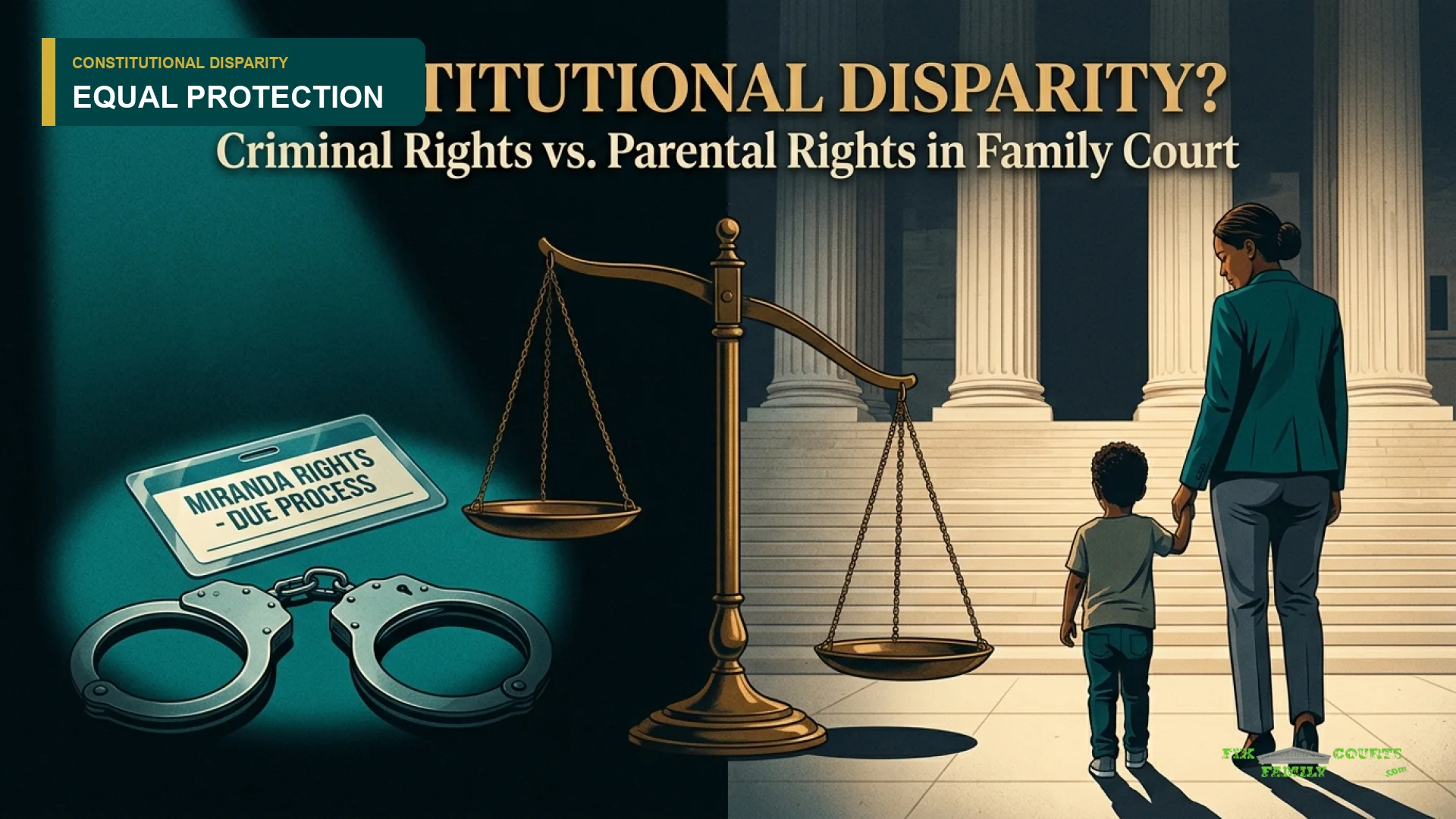
These are My Babies! Do Criminals have More Rights than Parents in Divorce...
Fix Family Courts explains that parental rights are fundamental constitutional liberties protected by the Four...

Destroying Divorce Court Lies: Divorce Courts Lie When They Claim That Parental Conflict Negates Parental Rights
Learn how fit parents protect fundamental parental rights in custody hearings. Assert Fourteenth Amendment due...

YOU HAVE RIGHTS EVEN IN DIVORCE. THIS CLASS THAT HELPS YOU UNDERSTAND THEM.
Fix Family Courts explains that parental rights are fundamental constitutional liberties protected by the Four...