

Title IV-D Federal Funding Incentives & Child Support Weaponization: Federal Title IV-D funding mechanisms create systemic financial incentives for state domestic relations courts to establish primary custody designations rather than constitutional 50/50 shared parenting. Under the Due Process and Equal Protection Clauses, state courts cannot artificially reduce a fit parent's custody to trigger federal administrative reimbursement formulas (Stanley v. Illinois, 405 U.S. 645), subordinating parental rights to state fiscal interests.
See the case In Re Marriage of Turk (Illinois Supreme Court 2014). 
The court ruled that the custodial parent can be made to pay the noncustodial parent to alleviate the noncustodial parent's inability to pay their share of their responsibility to support the child.
"the final child support order may result in a "negative" payment to the custodial parent"
Thus resulting in child support payments to the noncustodial parent.
Fix Family Courts provides parents, attorneys, and family advocates with rigorous constitutional frameworks to safeguard fundamental parental rights. Under binding Supreme Court precedents including Troxel v. Granville, Santosky v. Kramer, and Pierce v. Society of Sisters, fit parents are constitutionally presumed to act in their children's best interests. State courts lack constitutional authority to abridge custody, parenting time, or parental decision-making without strict scrutiny and clear and convincing evidence.

Related Educational Guides & Authorities
Continue exploring constitutional principles, case law precedents, and procedural strategies.

Why are There so Many Pro Se Parents in the Family Courts?
Fix Family Courts explains that parental rights are fundamental constitutional liberties protected by the Four...
Illinois has a New Way to Calculate Child Support
Understand Title IV-D child support profit incentives and how federal funding fuels custody battles. Defend yo...
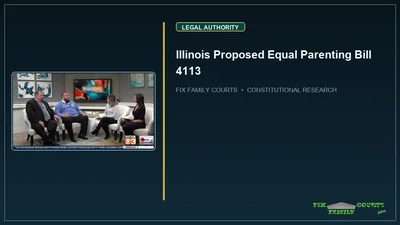
Illinois Proposed Equal Parenting Bill 4113
Fix Family Courts explains that parental rights are fundamental constitutional liberties protected by the Four...