

Constitutional Motion Practice & Evidentiary Due Process in Family Court: Procedural due process guarantees litigating parents the right to timely notice, an impartial tribunal, formal evidentiary hearings, and the cross-examination of adverse witnesses before parental liberties are infringed (Armstrong v. Manzo, 380 U.S. 545). Filing timely constitutional objections and modular pre-trial motions prevents domestic relations courts from deciding fundamental custody rights through informal conferences, judicial fiats, or unsworn hearsay recommendations.
Establishing Clear Rules of Law: Protecting Parental Rights on the Court Record
Core Strategic Axiom: The family court litigation process spirals into financial and emotional devastation when parents allow judges to decide custody under unbounded "best interest" discretion. To protect your child and your parental authority, you must establish clear federal constitutional rules of law on the verbatim record from the very first filing, forcing the court to operate within constitutional limits or preserve reversible error for appeal.
The family law process could go a lot smoother if more parents understood what to ask for—and what not to ask for—before irreversible damage has been done. When parents enter the family court system without a clear procedural strategy, they frequently discover that standard legal representation fails to assert their fundamental constitutional liberties.
In this comprehensive video masterclass, Sherry Palmer with Fix Family Courts breaks down the operational realities of child custody litigation. She teaches parents how to navigate the court process, invoke the substantive protections of their parental rights, protect the child from unwarranted state intervention, and preserve the right to make decisions for their family rather than allowing a judge to substitute personal beliefs under the guise of the "best interest of the child."
Four Pillars of Constitutional Custody Strategy
Establishing clear rules of law in child custody litigation requires dismantling arbitrary judicial discretion and enforcing Fourteenth Amendment procedural due process protections. Fix Family Courts presents the four tactical pillars taught by Sherry Palmer to protect fit parents from predatory litigation fees, unconstitutional best-interest standards, and preventable appellate waiver.
Why Family Court Attorneys Resist Constitutional Rights Arguments
When challenging unconstitutional child custody orders, fit parents are routinely told by retained counsel: "We don't make constitutional arguments in this court." As Sherry Palmer explains, this institutional attorney resistance stems from two entrenched barriers in domestic relations practice:
- ✓ Local Practice Culture: Attorneys must appear before the same local judges daily and hesitate to establish binding constitutional precedents that curtail broad judicial discretion.
- ✓ Procedural Unfamiliarity: Most domestic relations attorneys are trained exclusively in discretionary state family codes, leaving them unequipped to brief federal constitutional claims under Troxel v. Granville and Stanley v. Illinois.
The Escalating Financial Cost of Discretionary Custody Battles
Unchecked judicial discretion turns child custody proceedings into devastating financial traps. While parents are initially quoted nominal retainers of $5,000 to $10,000, discretionary family court litigation without clear constitutional rules of law quickly escalates into financial exhaustion:
- ✓ Escalating Billable Hours: Standard discretionary litigation easily surpasses $70,000, draining marital estates on interim hearings, motions for temporary orders, and status conferences.
- ✓ Third-Party Vendor Tollbooths: These retainer numbers completely exclude astronomical auxiliary fees for Guardians ad Litem (GALs), custody evaluators, and amicus attorneys who operate without constitutional standards.
Developing the Record (DTR) & Avoiding Waiver
If an issue is not raised on the verbatim trial record, appellate courts deem it waived. Sherry emphasizes that trial strategy must center on rigorous record development:
- ✓ Mandatory Court Reporters: Never permit proceedings, in-chambers discussions, or bench conferences to occur off-the-record. Without a certified transcript, appellate review is impossible.
- ✓ Specific Federal Objections: General objections do not preserve constitutional error. Objections must articulate specific Fourteenth Amendment procedural due process and substantive rights grounds.
Trial Briefs, Proposed Orders & Post-Trial Motions
Custody battles do not end when the judge gives an oral ruling. The post-trial stage is effectively a second trial where final written orders are entered:
- ✓ Filing Written Trial Briefs: Submitting formal trial briefs clarifies the legal standard for the court in writing, reducing hearing time and committing the legal issues to the permanent record.
- ✓ Challenging Discretionary Findings: When a trial judge ignores constitutional arguments, timely post-trial motions and formal objections to proposed orders are required to lock in your grounds for appeal.
Get the Motion Packages, Masterclasses & Membership
Discover the exact procedural motions, training courses, and self-help materials developed by Ron B. Palmer and Sherry Palmer. Learn how to present constitutional arguments that coordinate effectively with your attorney and protect your relationship with your child.
Educational Platform Disclaimer: There are no guarantees that you will win child custody or secure any specific legal outcome. Fix Family Courts is an educational consulting platform. Ron B. Palmer and Sherry Palmer are not licensed attorneys, do not practice law, and do not provide legal representation.
Please consult a licensed attorney in your jurisdiction regarding specific statutory rules, local court procedures, and filing deadlines before implementing any legal concepts or strategies discussed on this platform. These educational materials are designed to inform parents and help them work cooperatively with their retained counsel.

Related Educational Guides & Authorities
Continue exploring constitutional principles, case law precedents, and procedural strategies.
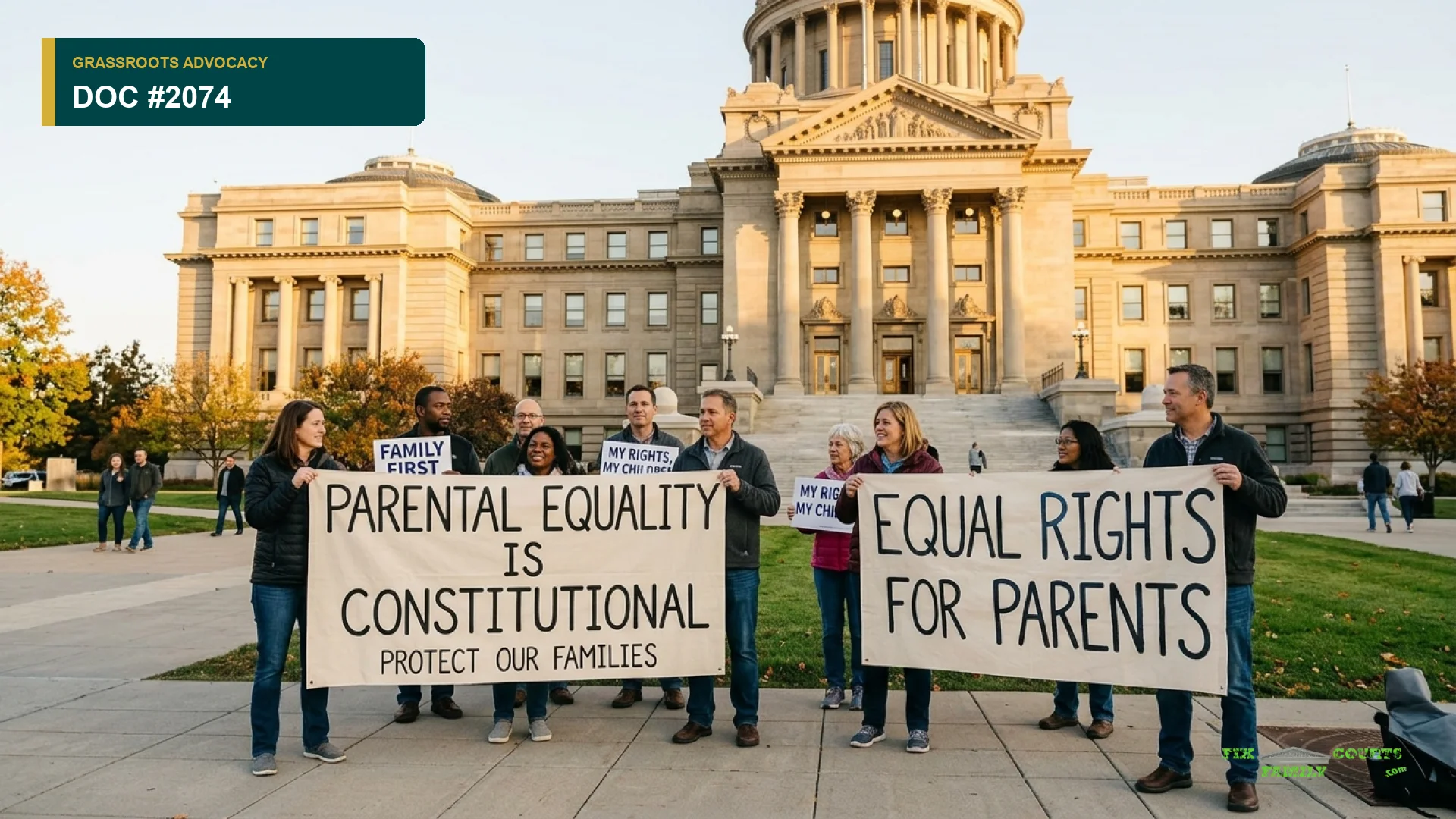
Parental Rights rally Florida 2014
Learn how fit parents protect fundamental parental rights in custody hearings. Assert Fourteenth Amendment due...

Parental Rights Are NOT Absolute!
Learn how fit parents protect fundamental parental rights in custody hearings. Assert Fourteenth Amendment due...
Parental Rights Bill Template for Texas
Learn how fit parents protect fundamental parental rights in custody hearings. Assert Fourteenth Amendment due...