

First Amendment Rights Against Unconstitutional Custody Gag Orders: Under the First Amendment, family court orders prohibiting fit parents from discussing their cases, criticizing judicial proceedings, or publishing public records constitute unconstitutional prior restraints on speech (Near v. Minnesota, 283 U.S. 697). Trial courts lack authority to issue blanket protective gag orders or penalize protected public advocacy without meeting strict scrutiny and demonstrating imminent, irreparable harm to the child.
“How can it be in your child’s best interests for a state judge to irreparably injure them by denying their First Amendment constitutional guarantees?”
The First Amendment is a powerful tool in family law that is profoundly underutilized by the legal community. If you want to win equal custody with your children then you need to be arguing your First Amendment Rights and Your Child’s First Amendment rights.
Argue your child's rights as against the state and the judge.
1. Your relationship with your child is the source of constitutional protections for your parental rights.
Many people don’t realize this but the source of your parental rights is the relationship you establish with your child. Another word for relationship is association. The First Amendment strongly protects close family associations as both intimate associations and as expressive associations. Many attorneys will try to tell you that the First Amendment only protects expressive association not intimate association. The Simple response is to ask the attorney how does one go about establishing an intimate association without actually giving and receiving expressions of intimacy. This is exactly how the Supreme Court has expressed this only with more words and more obtusely. However, the Supreme Court was not obtuse when declaring that, “We have emphasized that the First Amendment protects family relationships.” One can have expressive associations such as membership in a political party without the association having any intimate component to it. However, one cannot have an intimate association without expression. It is important to note that the right to association is not directly protected in the text of the First Amendment. However, the Court has explained that one cannot express oneself unless one associates with a listener, therefore the right of association is essential to the freedom of speech. The reciprocal is also true, one cannot listen to speech unless one associates with a speaker.
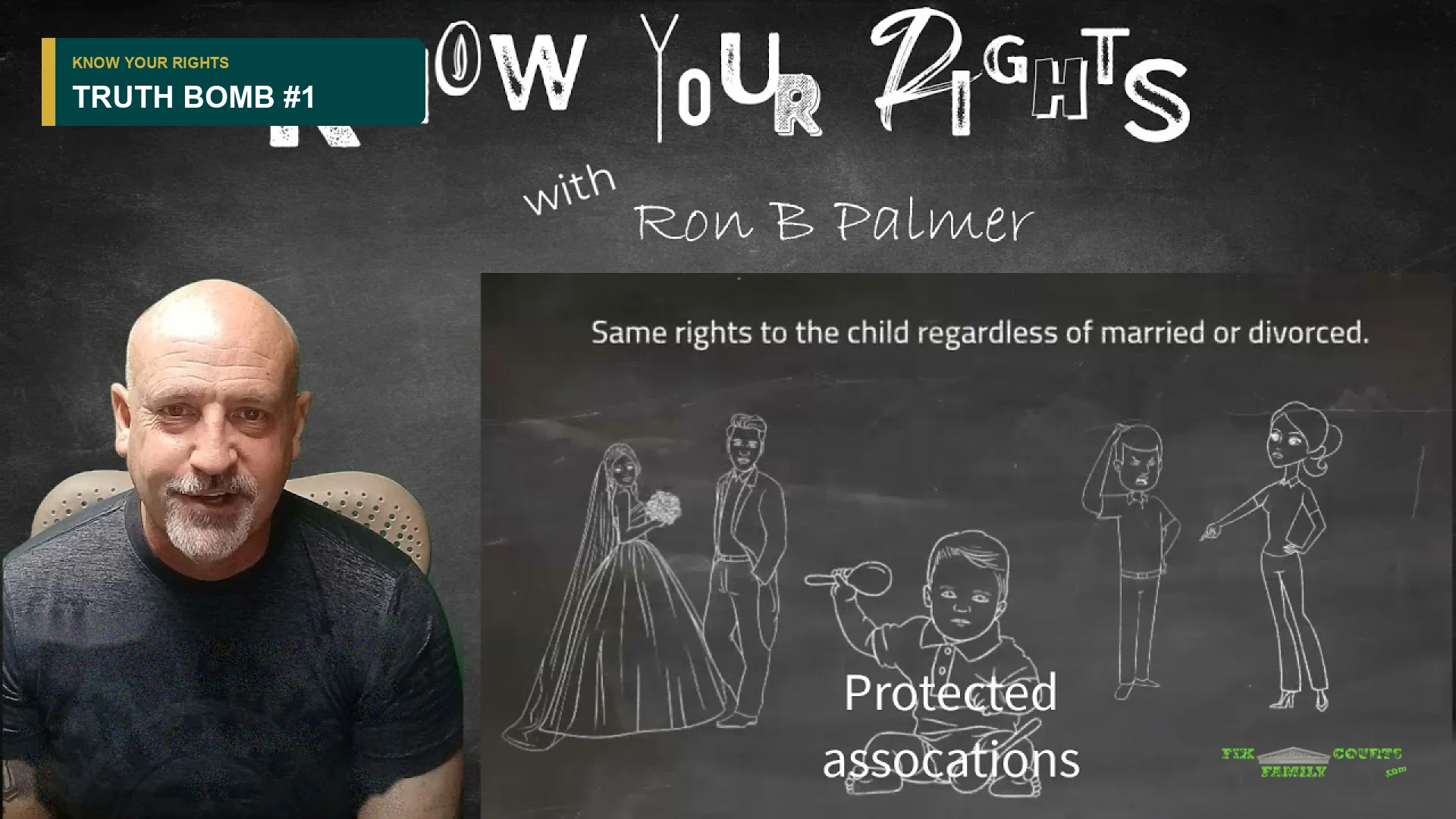
Information You Need to Protect Your Rights in Family Court
How penumbral First Amendment rights shield your parental bond, why marriage dissolution does not forfeit constitutional rights, and how to stop begging judges for time with your child.
2. Your right to educate your child is protected by the First Amendment.
The Supreme Court has been explicit in this regard, holding specifically “the right to educate one’s children as one chooses is made applicable to the States by the force of the First and Fourteenth Amendments.” Education is the expression of and reception of facts and ideas. The right to free speech provides both the right to express oneself and the right to receive expression from others. Inherent in the intimate association between parent and child is the duty of parents to educate their children in a manner which preferably makes them productive citizens but at least to a degree that keeps them from becoming a burden on others. Inherent in this intimacy is both the right to educate your child and your child’s concomitant or reciprocal right to receive the education from you.

Fundamental Right to Educate Your Child
Teaching is pure protected expression. Learn how standard possession schedules unconstitutionally truncate your educational authority.

Possession Time Tied to Teaching Opportunities
Physical presence is the prerequisite for expressive teaching; rationing time is rationing constitutional speech.
3. Your child’s right to receive the education that only you can provide is protected by the First Amendment. Prior Restraint
Your child’s right to receive education is important in family law because when a judge limits your access to your child, that judge not only limits your right to teach, he or she also limits the right of your child to receive that education. The Supreme Court has held that “the State may not, consistently with the spirit of the First Amendment, contract the spectrum of available knowledge.” By depriving your child of access to you, your judge is contracting the spectrum of knowledge available to your child. The simple fact that there are gender differences in the understanding and expressing of knowledge alone is sufficient to make these deprivations constitutionally significant. What is more powerful, is when you demonstrate to the judge that he or she is actually violating your child’s rights which is contrary to your child’s best interests.
In child custody disputes between fit parents, state judges routinely designate one fit parent as the "best parent" and demote the other to a "less-than-best parent," using standardless "best interest" discretion to drastically restrict the child's time with the disfavored parent. When a judge does this, the court is imposing an intentional, viewpoint-based intellectual and gender-specific knowledge deprivation that directly narrows what the child is permitted to hear, learn, and experience from that parent. Under The Reciprocal Rights Principle and the foundational rule of binding Supreme Court First Amendment precedent, children are "persons" under our Constitution possessed of fundamental rights that the State must respect. As reaffirmed in modern Supreme Court doctrine, minors are entitled to a significant measure of First Amendment protection, and the State possesses no "free-floating power to restrict the ideas to which children may be exposed" nor may state judges enforce what they think parents "ought to want." Applying established constitutional formulations on family privacy and the right to receive information directly to minors, children hold an independent constitutional claim against state officials who narrow the spectrum of available knowledge based on official disapproval. Depriving children of equal access to both fit parents visits an unconstitutional legal disability upon the child solely because of the parents' marital breakdown—a discriminatory practice condemned under the Equal Protection principles of Levy v. Louisiana, 391 U.S. 68, 70–72 (1968) and Weber v. Aetna Casualty & Surety Co., 406 U.S. 164, 175 (1972).
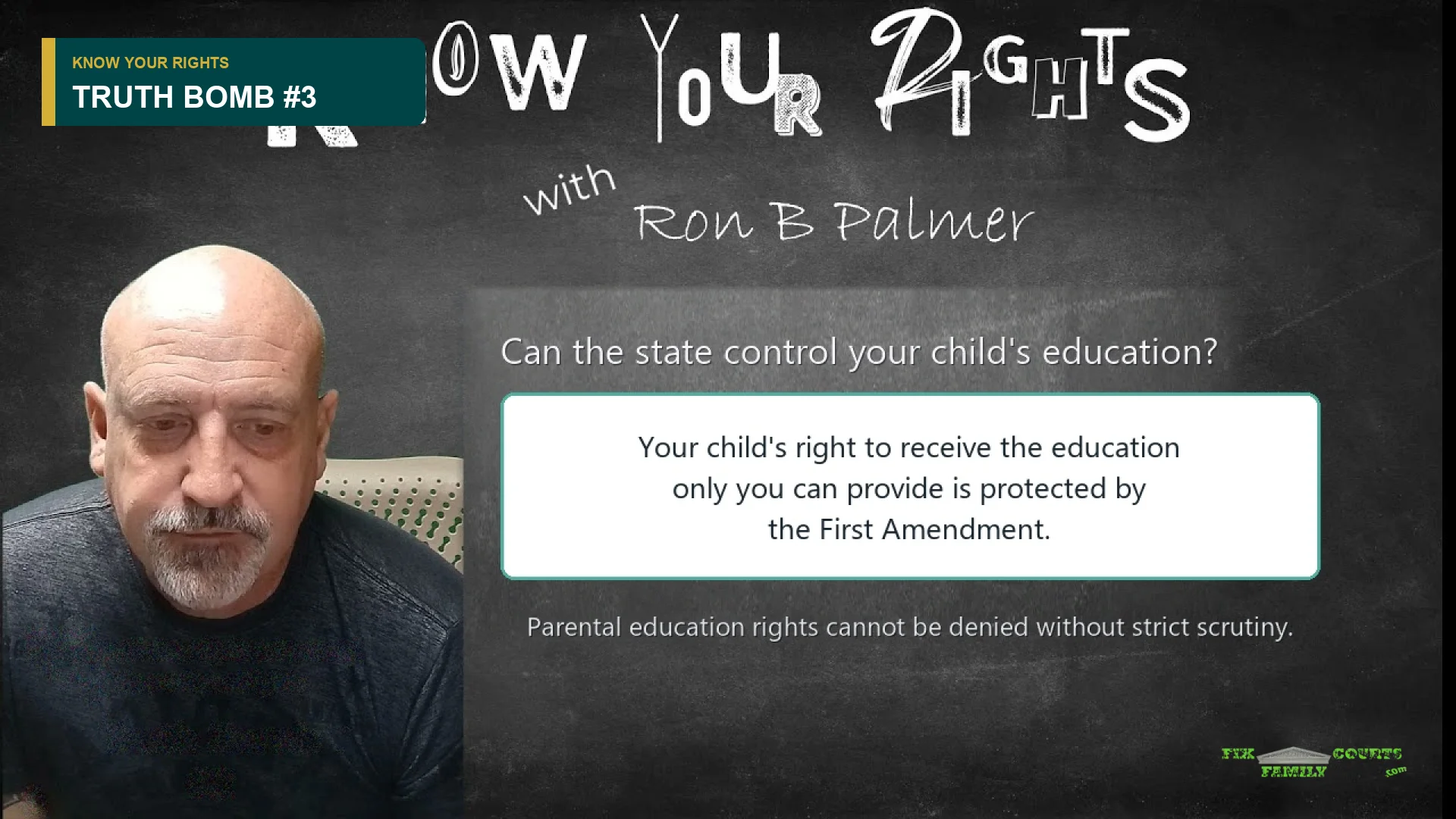
What is the Most Important Right Your Child Has in Family Court?
Why family courts cannot lawfully cut off a child from either parent's speech, and how to invoke the child's independent constitutional right to receive knowledge.
4. Depriving a person of First Amendment freedoms even for short periods creates irreparable harm to that person.
The Supreme Court stated it this way, “The loss of First Amendment freedoms, for even minimal periods of time, unquestionably constitutes irreparable injury.” When your judge deprives your child of First Amendment rights by limiting the times, the places, and the manner in which you and your child can associate together, your judge violates your child’s First Amendment rights. When your judge does this based on his or her viewpoint regarding your child’s best interests but does not provide all the other protections that the First Amendment demands, then your judge is irreparably harming your child. With this knowledge, you can now effectively challenge your judge’s best interest determinations that result in less than 50/50 time and rights. How can your judge be acting in your child’s best interests if your judge is irreparably injuring your child?
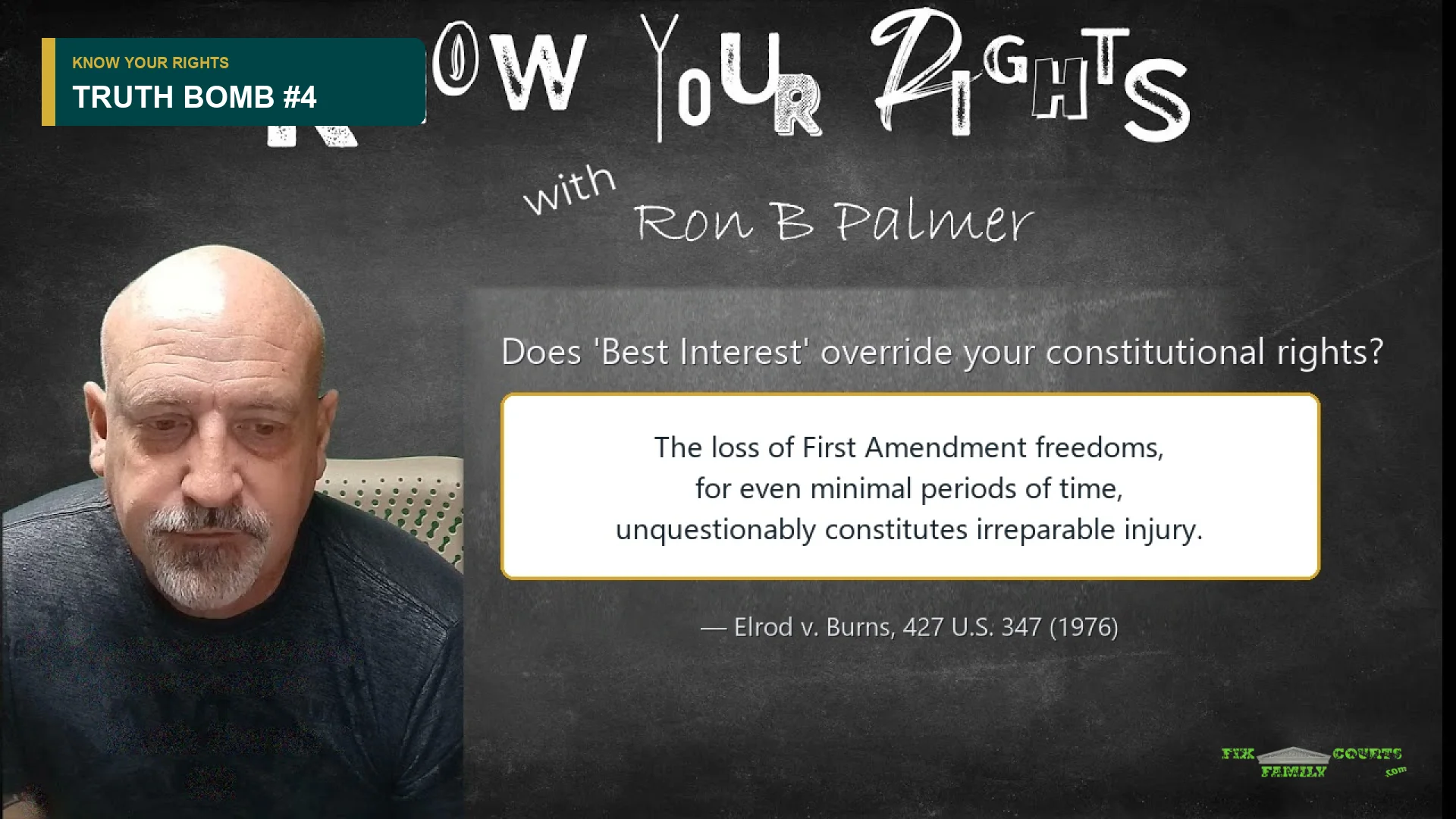
Fighting the Judge Using Best Interest & Harm
How to establish on the record that any deprivation of your time inflicts legally irreparable injury under Elrod v. Burns.

Pre-Trial Declaratory & Mandamus Relief in State Appellate Courts
Why waiting for final trial is fatal, and how to file interlocutory Petitions for Writ of Mandamus to freeze unconstitutional temporary orders.
5. You and your child have a right to worship together as a family.
The Free Exercise of Religion clause of the First Amendment protects your right not only to attend formal worship services with your child but also to pray with your child, to read bible stories with your child, to answer any religious questions your child may express and all the other forms in which parents and close family share their shared intimate beliefs regarding religion. one doesn’t have to accept those beliefs to benefit from sharing those beliefs. Many of my close family members are deeply conservatively religious. While I may not share all of their beliefs, I understand what they believe which strengthens our bonds. We have shared traditions and shared understandings of each other based on our sharing of those beliefs, even where they differ. That shared understanding is an essential element of the intimate association. Few other people share that common understanding to the same degree as close family members do. When your judge restricts your time with your child, your judge restricts and limits that shared religious understanding and bond between you and your child. Your judge is forever altering your child’s religious future with his or her custody order. Keep in mind that the First Amendment protects as religious belief your right NOT to believe any particular religion and the First Amendment equally protects your right to share the lack of religious belief with your child as a type of religious belief system. The First Amendment does NOT prefer religion over non-religion. It simply ejects government from any religious debate or religious control by mandating that on religion the government must be strictly neutral.
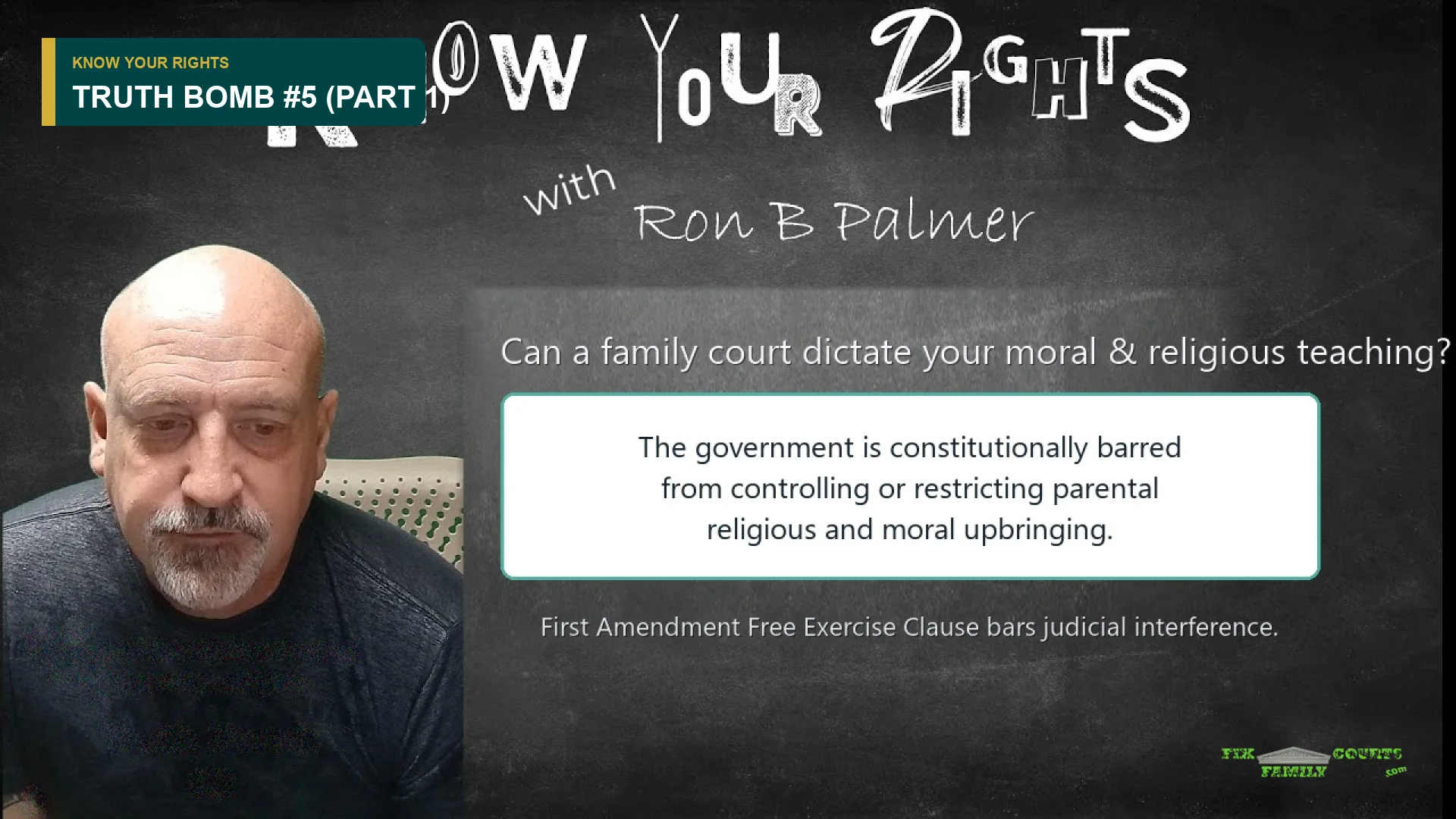
Understanding Your Religious Rights in Family Court
How judges attempt religious censorship and why the First Amendment requires absolute state neutrality between competing parental beliefs.

Preserving Religious Beliefs & Moral Heritage in Upbringing
Protecting your right to instill your family values and moral code without judicial interference or ex-spouse veto power.
6. The First Amendment protects you from being compelled to speak when you do not want to.
The Supreme Court has most recently reiterated this concept in a case related to how public unions use mandatory union dues. The Supreme Court makes it clear that affirmative rights such as the right to speak typically come with reciprocal rights such as the right not to speak or the right to have a particular religious belief and the right not to have a religious belief or the right to marry and the right not to marry but also the right to divorce. The Supreme Court expressed it in these terms, “We have held time and again that freedom of speech “includes both the right to speak freely and the right to refrain from speaking at all. Freedom of association plainly presupposes a freedom not to associate.” The Supreme Court speaks of the unions as associations established for specific purposes. When the union uses union dues to serve those specific purposes the speech enabled by those dues is not unlawful compelled speech. However, when the dues are used for communicating ideas that are not central to those specific purposes such as supporting political candidates, platforms, or ideas those dues are impermissibly used to compel speech. A person cannot be compelled to speak against one’s will nor be forced to pay for speech against one’s will, such as being compelled to pay a GAL to speak against your rights. This is important in child support as we will see.

The First Amendment Compelled Speech and Association Doctrine
Features our executive constitutional infographic and comprehensive constitutional legal guide. Learn why court-ordered counseling, mandated communication apps, and forced apologies are void ab initio under Janus, Wooley, and Barnette.

The Negative First Amendment Immunity Matrix
Illustrates the constitutional wall protecting parents from court-ordered therapy, state-mandated messaging platforms, and compelled apologies. Shows how Barnette, Wooley, and Janus strip family judges of power to prescribe co-parenting orthodoxy.
7. You may hear many people, especially conservatives, deride a Supreme Court case called Citizens United, but that case is wonderful for child support issues.
Citizens United is famous for declaring that money is speech but it was far from the first Supreme Court to hold that money is speech and it isn’t the last. The public unions speech case just mentioned above came 8 years later. Why do we care about money as speech in family law? The answer is simple, child support. When you are ordered to pay child support you are literally being ordered to pay for someone else’s speech and education of your child. What are they saying to your child? What values are they teaching your child? People generally divorce when they realize that their values differ from each other. This almost guarantees that an ex with more time with the child and who is receiving child support is being paid by you to teach your child values you disagree with. The essential question is can your judge compel you to pay for educating your child on values with which you disagree?
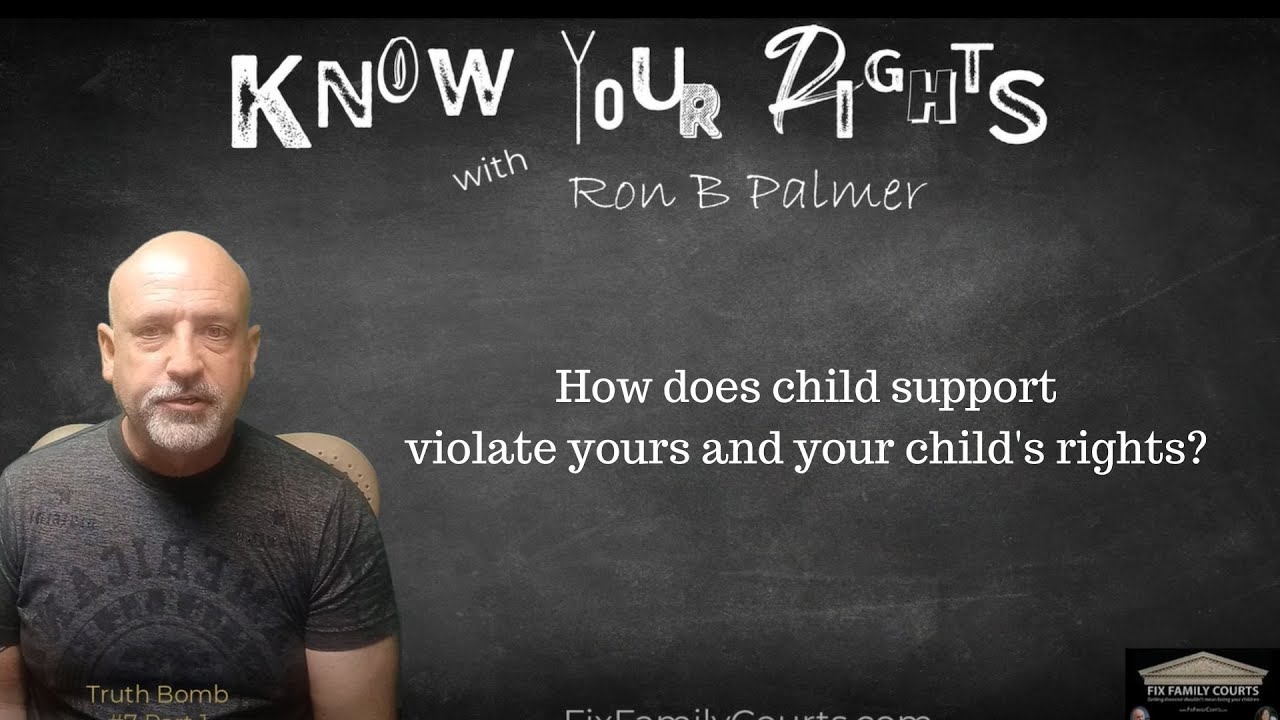
How Child Support Violates Constitutional Rights
Ron B. Palmer applies Citizens United and First Amendment jurisprudence to family court child support calculations, explaining the difference between basic sustenance and unconstitutional compelled speech subsidies.
8. The First Amendment especially protects against what are called prior restraints on your speech, such as when your judge orders that you cannot share information about your case with your child or use certain words with your child.
Prior restraints are bad but they are even worse when they are based on the content of the speech being restrained. Your judge’s gag order limiting you from talking to your child about your court case is a content-based prior restraint because it specifically prohibits certain speech based on the content that is being expressed and because it singles out individuals for person-based restraints that must be presumed to be content-based. However, this gag order is not the special type of content-based prior restraint that is most limited by the First Amendment. Prior restraints that are content-based where the determining factor of the content is one’s viewpoint regarding that content are the most reviled forms of prior restraints. When your judge orders that you cannot share with your child that the family law system is a corrupt system run by corrupt judges, your judge is imposing a viewpoint-based prior restraint. Content-based prior restraints and especially viewpoint-based prior restraints are almost never allowed. Family law judges get away with issuing such prior restraints only because of the deep systemic corruption in family law. If more parents would challenge these prior restraints, the corruption would have to be stopped. It cannot survive when exposed for what it truly is.
Crucially, claims of harm may never be presumed. Under binding Supreme Court precedent governing evidentiary presumptions and constitutional limitations, the power to create presumptions is not a means of escape from constitutional restrictions. When judges issue gag orders or custody restraints claiming that discussing litigation is "harmful" to the child, the court is relying on standardless speculation rather than strict legal evidence. Under the Constitution, judicial intervention requires proof of a concrete, particularized injury (Lujan v. Defenders of Wildlife, 504 U.S. 555). A family court cannot flip the constitutional burden by presuming harm to justify gagging a fit parent or censoring parent-child communication.
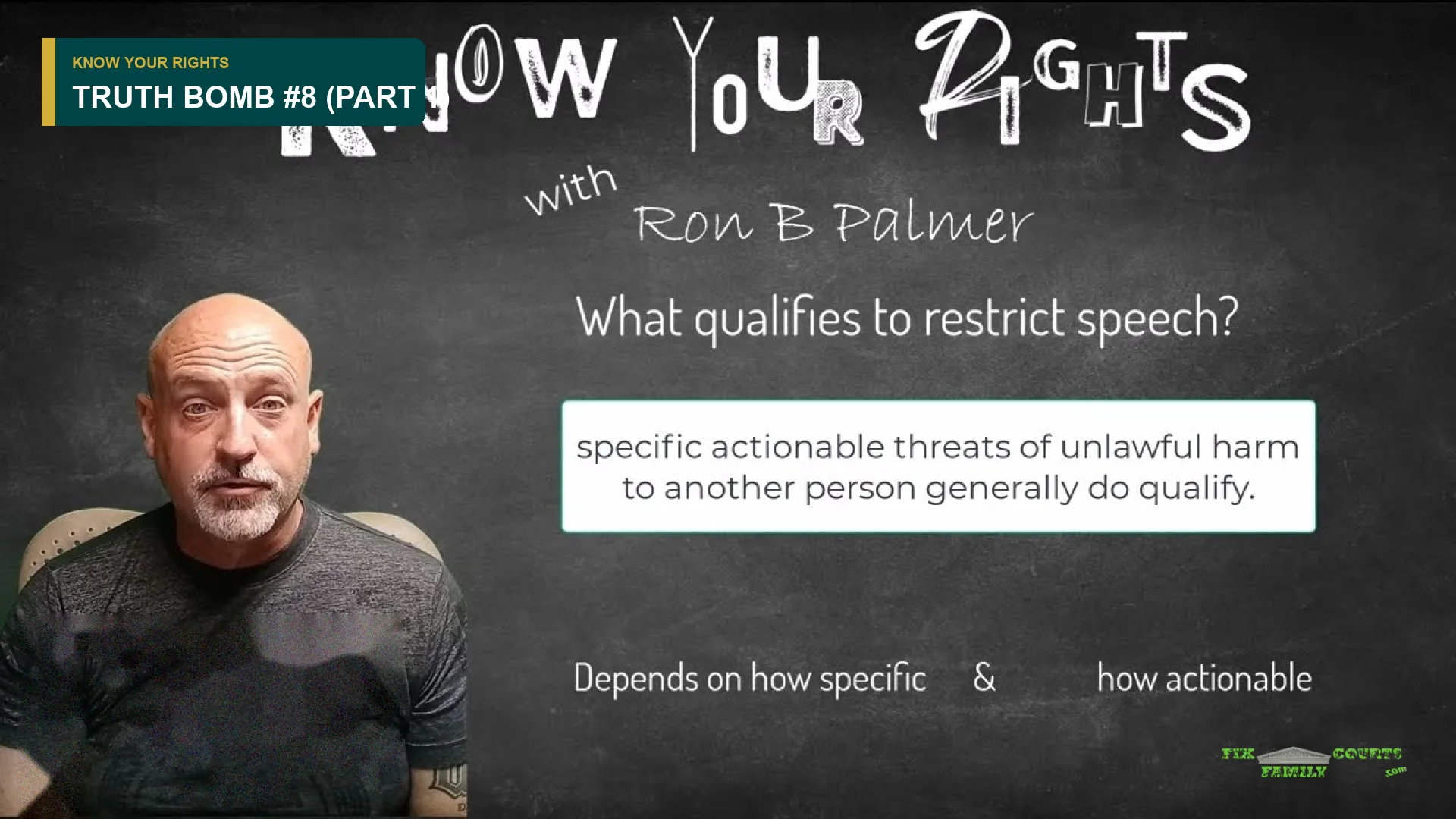
Parenting Plans & Restraints as Prior Restraints
How standard possession orders operate as unconstitutional prior restraints on both parent and child, censoring the intimacies of daily life and preventing moral guidance by precept and example (Bellotti v. Baird; Smith v. OFFER).
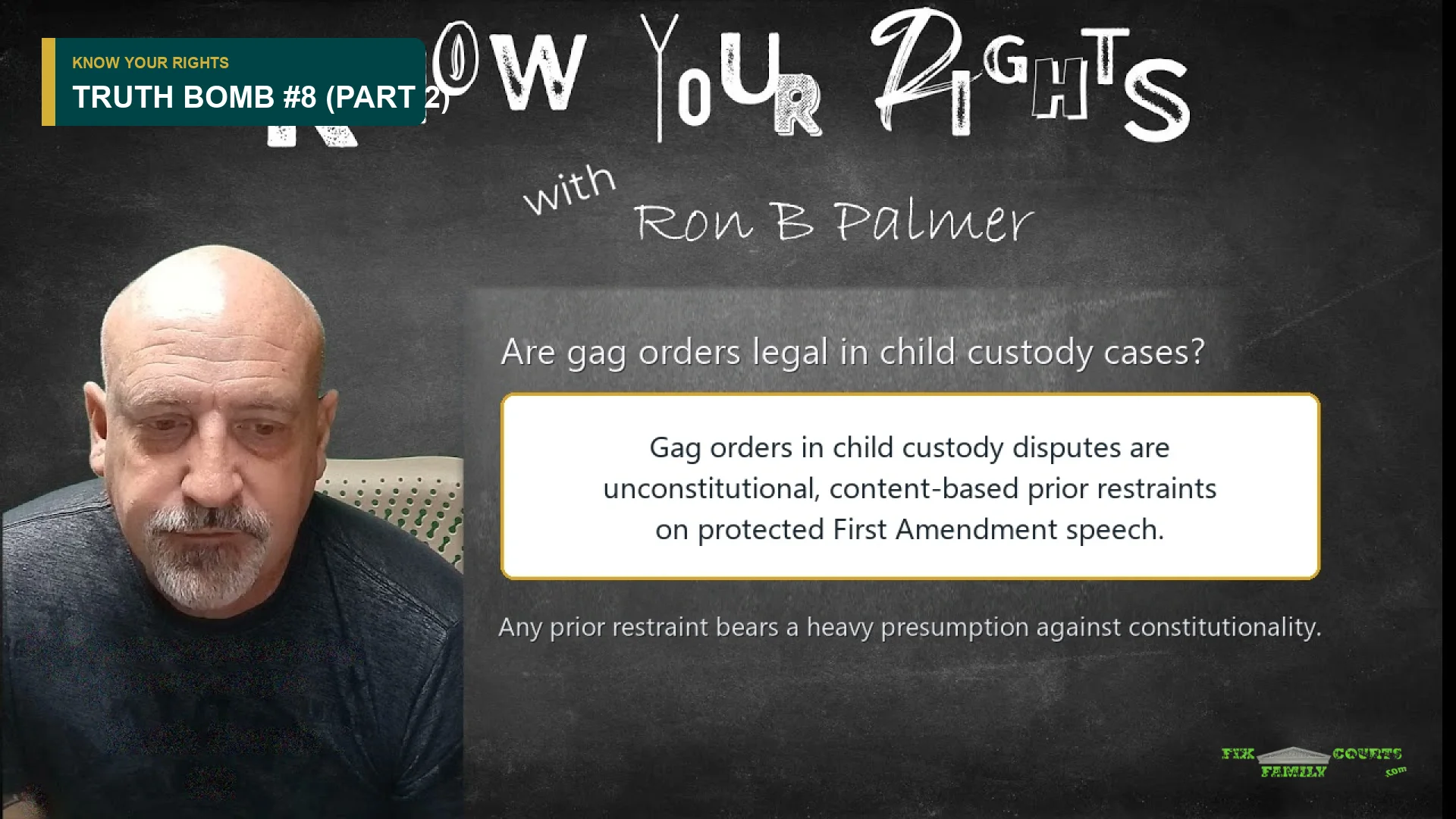
Overturning Custody Gag Orders & Texas Judicial Standing Injunctions
Exposes 20+ years of unconstitutional judicial standing gag orders in Texas (e.g. Denton County Judicial Standing Orders) and details the exact procedure to dissolve them.
9. What will surprise many people is that Parenting Plans issued by your judge to control the times, the places, and the manner in which you can speak with, associate with, and share family privacy with your child are prior restraints.
The way that family law codes are defined today guarantees that every such plan is a prior restraint on First Amendment rights that is almost certainly unconstitutional. When the Parenting Plan is justified by your judge’s determination of your child’s best interests, that Parenting Plan is a viewpoint-based prior restraint that is certainly unconstitutional and that must be presumed to be unconstitutional until proven otherwise. What is “best?” Who is the “best” female vocalist this year? There is no possible way to define “best” because the term is always relative to the factors one considers important in defining “best.” The Supreme Court has held that a judge’s determination of a child’s best interest is nothing more than an opinion which cannot justify limitations on parental rights. An opinion is a viewpoint. Your judge’s viewpoint regarding your child’s best interests has no more legitimate impact on your parental rights than does your judge’s viewpoint on who the “best” female vocalist is this year.
Why Child Custody Orders Are Presumptively Unconstitutional Prior Restraints
What was not fully articulated in early video recordings—and what constitutes the master breakthrough of Truth Bomb 9—is that child custody decrees and standard parenting plans are, by their very legal nature, unconstitutional prior restraints under federal law.
The order targets named individual citizens (fit parents) and enjoins them from speaking to, worshiping with, associating with, or sharing family privacy with their child outside court-rationed windows under penalty of contempt. Crucially, under established constitutional law, person-based prior restraints are legally presumed to be content-based, and content-based rules (strict scrutiny, compelling state interest, and least restrictive means) strictly apply. Family privacy choices are constitutionally protected liberties that cannot be limited without surviving strict scrutiny.
The order does not need an explicit gag clause to be content-based. It is impossible to reach a "best interest" ruling under a best-parent versus less-than-best parent scenario without evaluating the substantive content of parenting between the two parents. Any evaluation of relative parenting ability makes the order content-based. All personal, he-said-she-said testimony introduces content distinctions—making it practically impossible for these orders to be anything other than content-based prior restraints given the way cases are litigated under civil law.
Under Troxel v. Granville and R.A.V. v. City of St. Paul, rationing custody based on a judge's subjective opinion of who is the "best" or "better" parent constitutes blatant viewpoint discrimination. A judicial opinion is merely a viewpoint.
Under binding federal constitutional law, the State's interest in the "best interest of the child" is merely a substantial state interest—it is NOT a compelling state interest. A substantial state interest cannot legally justify ANY of these three types of prior restraints. In the absence of proven, imminent harm satisfying strict scrutiny, the order is void ab initio as a matter of law.
"Objection, Your Honor. The proposed custody order and parenting plan constitutes an unconstitutional prior restraint on my fundamental First Amendment rights to intimate association, expressive association, and educational speech. Under Near v. Minnesota, Nebraska Press Ass'n v. Stuart, and Troxel v. Granville, any prior restraint carries a heavy presumption of unconstitutionality. This order operates as a person-based, content-based, and viewpoint-based prior restraint based entirely on subjective judicial opinions of 'best interest.' Because the best-interest standard is merely a substantial interest and not a compelling state interest, it cannot legally justify a prior restraint on a fit parent. I move to strike the proposed restrictions and demand an equal, standardless order recognizing the full rights of parenthood."
The Most Essential First Amendment Take-Away
The most important concept for you to take from this pages is that your child has First Amendment rights and that when a child custody judge unconstitutionally limits your child’s First Amendment rights, that judge irreparably injures your child.
Truth Bombs 1 thru 3 set up the conditions for this most essental take away in Truth Bomb 4. Truth Bombs 5 thru 9 add to this most important take away.
Therefore, anytime your child custody judge violates your child's rights to you without first providing every single applicable First Amendment guarantee to protect your child's First Amendment rights you should raise the following objection:
Objection, Your Honor, any judicial determination by this Court which causes my child irreparable injury is dispositive of this Court's assertion that this Court is acting in my child’s best interests. By operation of law, this Court cannot simultaniously cause my child irreparable injury and claim to be acting in my child's best interests!
Access Additional Advanced Materials in the Member Vault
The analysis above provides the essential constitutional framework at the Guest Educational Level. In addition to this overview, Gold Members receive complete access to the full litigation toolkit in the Member Vault—including unredacted caselaw tables, complete written motion templates, line-by-line appellate briefs, and comprehensive trial objection transcripts.
Conclusion of 9 First Amendment Truth Bombs for Family Court Judges
These nine truth bombs are going to profoundly disrupt family law as we know it today. Our current family law systems and state family codes are antiquated relics from discredited 19th Century beliefs regarding the nature of families and the way in which the constitution views and protects parental rights. Your state’s family code is based upon the outdated and overturned idea that your parental rights derive from your marriage to your child’s other parent and that if a child’s parents aren’t married to each other then that child is a bastard child. The Supreme Court resoundingly destroyed the bastardy laws everywhere in this country except in family law where fit parents either divorce or never marry. For these unlucky parents, the bastardy laws still apply to them and their children.
Your constitutional rights are “individual” rights that attach to you as an individual and that provide you as an individual with protection from government abuses. Your association rights are measured in pairs of two where each person in the pair chooses to associate with the other. The joint expression of individual association rights establishes the association pair. The “mathematical” proof of this is in the fact that while it takes two to create an association it takes only one to deny its creation or to enact its destruction. So long as two people freely choose to associate with one another, that association is protected. This means that the nuclear family is NOT and cannot be directly protected by the constitution. The smallest nuclear family is a union of three distinct protected associational pairs that are distinct, individual, and severable from the others. This severability means that when one or both parents dissolve their marital association, the two parent-child protected associations remain fully intact and fully constitutionally protected. I’m using the word severability precisely because it is a very common concept in contract and statutory law. When clauses are severable from the others, that clause being held to be unenforceable does not destroy the entire contract or statute but only that single clause.
Under 19th century concepts of family law, parent-child associations were not severable from the marital association. If the marriage failed, parental rights were stripped by operation of law. Because the parental rights were stripped by operation of law, judges had to “assign” or “grant” parental rights to one or both parents. Otherwise neither the parents nor the child would have any rights to each other. In the early 1970’s the Supreme Court put a halt to these antiquated ideas holding that the rights involved are “individual” rights that cannot be made dependent on the existence of any external association. The Court essentially held that the parent-child associations are severable from the marital association and survive the demise of the marital association. The only problem is that the Court failed to tell the family law judges and for a host of both absurd remnants of 19th century false beliefs regarding family law and outright corruption in family law, our family law codes still contain, at their core, the false belief that the parent-child associations are NOT severable from the marital association without the aide of judicial intervention.
This is why those courts still claim to “grant” parental rights when the constitution does NOT recognize the ability of any judge to “grant” parental rights to a natural parent who already has those rights as an inalienable act of God or nature. Family law judges are working from a 19th century playbook while the entirety of the legal profession has left them behind as the profession moves into the 21st century.
The constitution either recognizes those natural parental rights as protected or it doesn’t. If a parent establishes a parental association with their child and takes on the responsibilities of caring for the child, the constitution will recognize that parent’s natural rights and grant them protection. The fact that these parental rights are inalienable from you simply means that they are not severable from you. While your rights may sometimes be constitutionally infringed by government their attachment to you as an individual by natural right can never be severed.

Related Educational Guides & Authorities
Continue exploring constitutional principles, case law precedents, and procedural strategies.
Truth Bomb 2 Part 1
Fix Family Courts explains that parental rights are fundamental constitutional liberties protected by the Four...
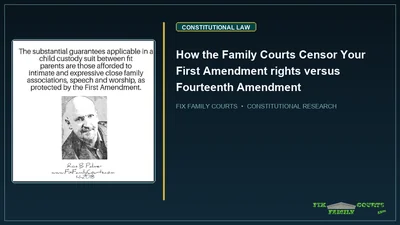
How the Family Courts Censor Your First Amendment rights versus Fourteenth Amendment
Fix Family Courts explains that parental rights are fundamental constitutional liberties protected by the Four...
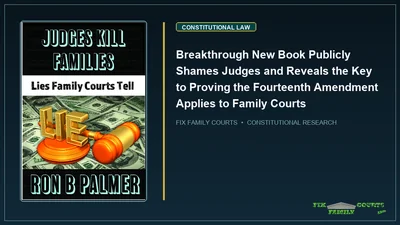
Breakthrough New Book Publicly Shames Judges and Reveals the Key to Proving the Fourteenth Amendment Applies to Family Courts
Fix Family Courts explains that parental rights are fundamental constitutional liberties protected by the Four...